 |
|  |











|
|||||||||||||
|
|||||||||||||
|
UNIVERSITY OF MASSACHUSETTS LOWELL Citations/year: h-index 38 (2017)
Single-Walled Carbon Nanotube Image of Gandhi Inkjet Printed on Plastic
|
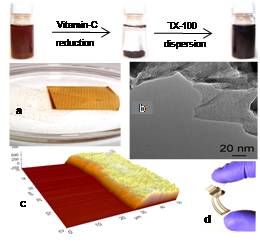
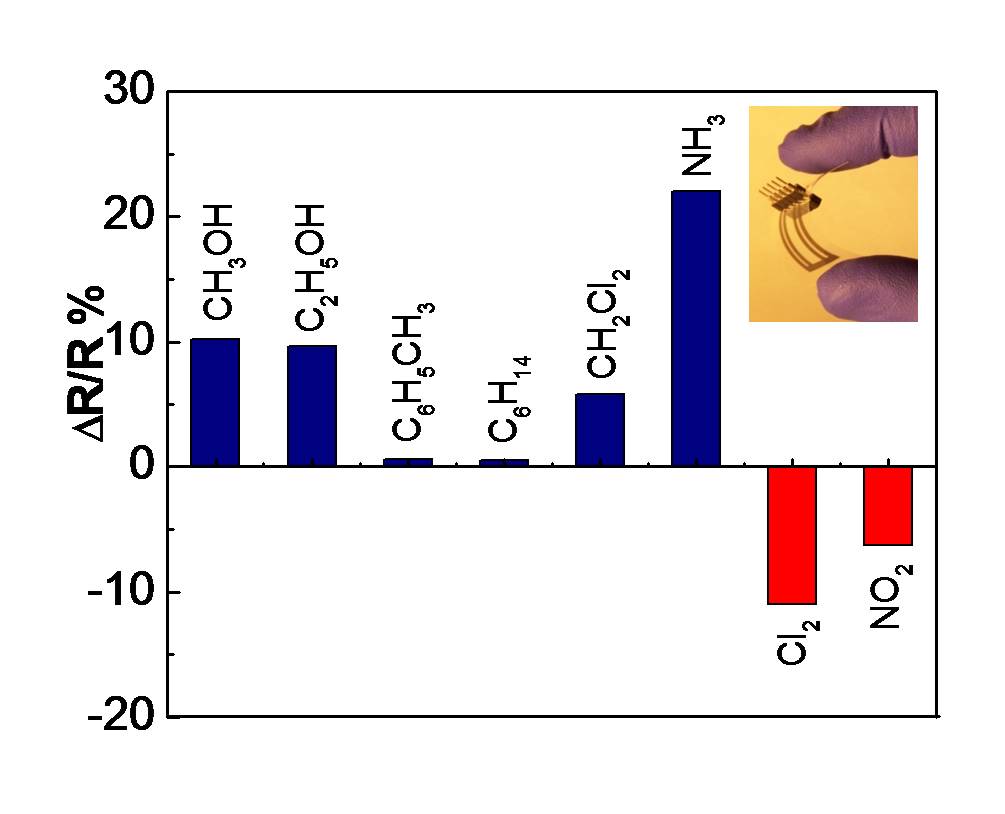
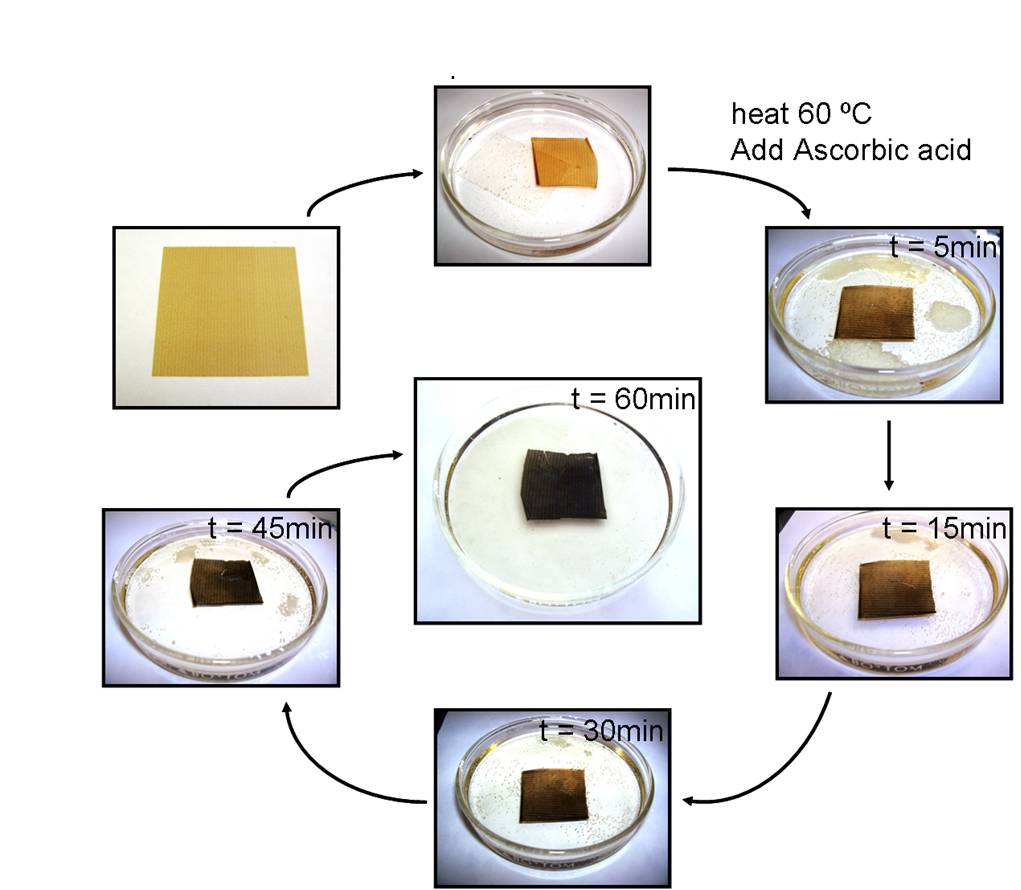
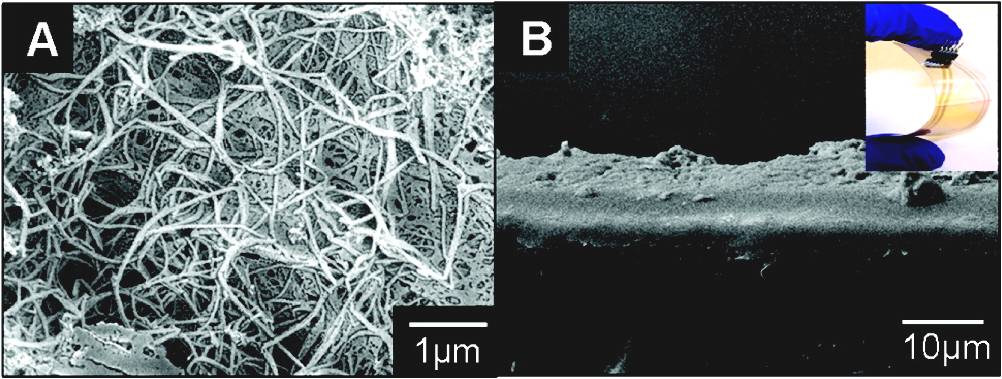
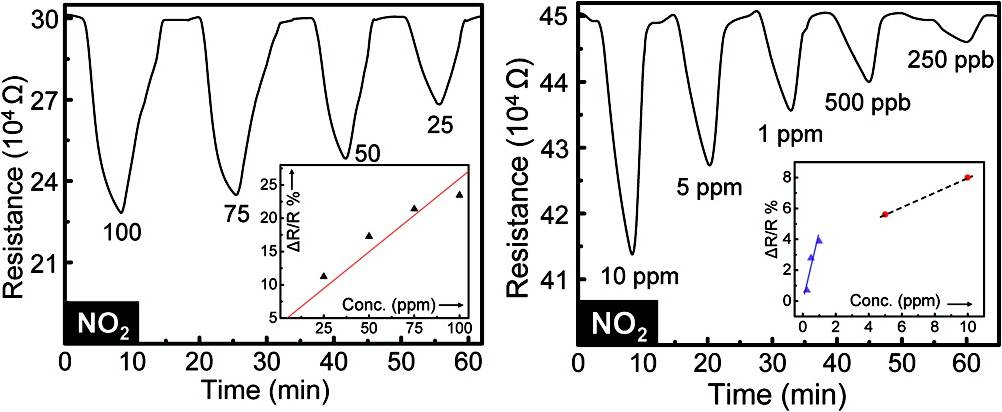
RESEARCH Just print that graphene! Films of graphene oxide and reduced graphene oxide are printed onto a flexible plastic surface (see picture), using inkjet techniques, which are used to detect chemically aggressive vapors such as NO2 and Cl2. Vapors in the 100 ppm–500 ppb concentration range can be detected in an air sample without the aid of a vapor concentrator.
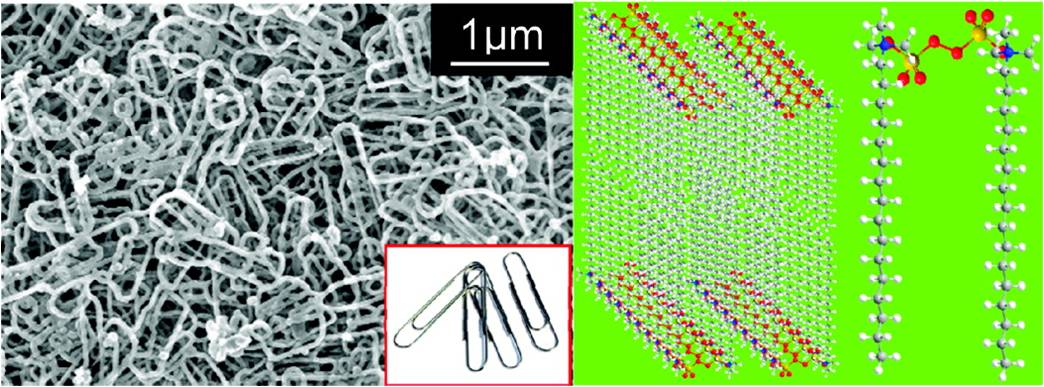
Flexible All-Organic Vapor Sensor Using Inkjet Printed Reduced Graphene Oxide, Angewandte Chemie 49 2154 (2010). V. Dua, S.P. Surwade, S. Ammu, S. Agnihotra, S. Jain, K.E. Roberts, R.S. Park, R.S. Ruoff, and S.K. Manohar. (citations: 542). Citations as of: 07/2017 Want conducting polymer nanoclips? Don't forget to use conditioner! Bulk quantities of electronic conducting polymers such as polyaniline, polypyrrole, and poly(3,4-ethylenedioxythiophene), having an unusual 2D nanoclip-like morphology is described using a general oxidative template assembly route which is orchestrated by an insoluble complex formed between an anionic oxidant (S2O82-) and a cationic surfactant (used in conditioners).
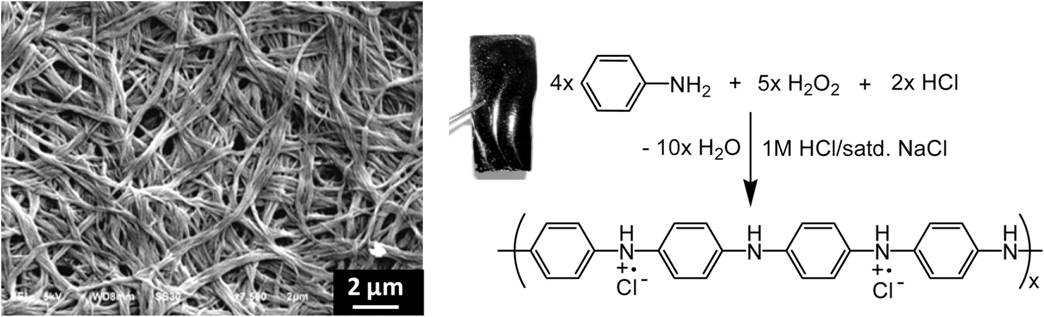
Oxidative Template for Conducting Polymer Nanoclips, Journal of the American Chemical Society 132 13158 (2010). Z. Liu, X. Zhang, S. Poyraz, S.P. Surwade, and S.K. Manohar. (citations: 84). Citations as of: 07/2017 Want to use just H2O2 to synthesize polyaniline? Pass the salt, please! Nanofibers of polyaniline and oligoanilines of controlled molecular weight, e.g., tetraaniline, octaaniline, and hexadecaaniline, are synthesized using a versatile high ionic strength aqueous system (add salt) that permits the use of H2O2 with no added catalysts as a mild oxidizing agent. Films of oligoanilines deposited on plastic substrates show a robust and reversible chemiresistor response to NO2 vapor at room temperature in ambient air (100−5 ppm).
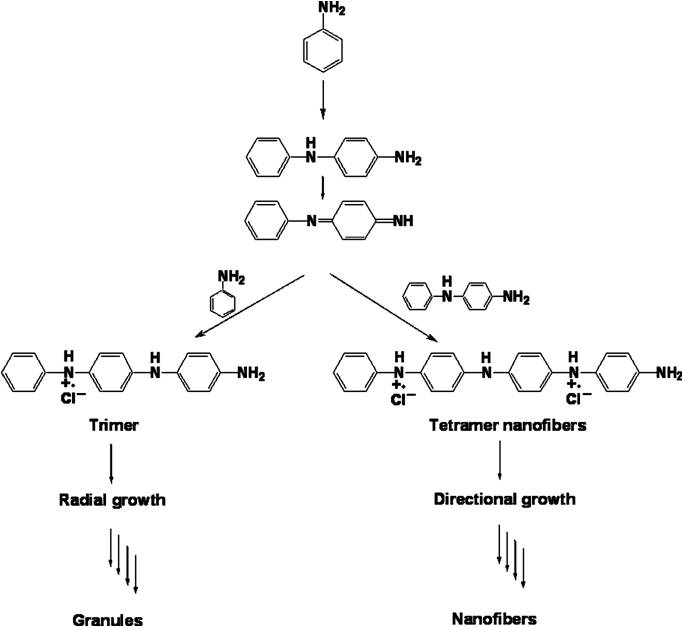
Catalyst-free Synthesis of Oligoanilines and Polyaniline Nanofibers using H2O2. Journal of the American Chemical Society 131 12528 (2009). S.P. Surwade, S. Agnihotra, V. Dua, S. Jain, S. Ammu, N. Manohar, and S.K. Manohar. (citations: 82). Citations as of: 07/2017 How are conducting polymer nanofibers formed? Its called seeding! Surfaces such as the walls of the reaction vessel and/or intentionally added substrates (seeds) play a dramatic role in the evolution of nanofibrillar morphology. Nucleation sites on surfaces promote the accumulation of aniline dimer that reacts further to yield aniline tetramer, which (surprisingly) is entirely in form of nanofibers and whose morphology is transcribed to the bulk by a double heterogeneous nucleation mechanism. This unexpected phenomenon could form the basis of nanofiber formation in all classes of precipitation polymerization systems.
Origin of Bulk Nanoscale Morphology in Conducting Polymers. Macromolecules 42 1792 (2009). S.P. Surwade, N. Manohar, and S.K. Manohar. (citations: 61). Citations as of:07/2017 Just when we thought parent polythiophene was irrelevant..... Thin, conducting nanofiber films of parent polythiophene can be rapidly synthesized on plastic substrates directly during chemical oxidative polymerization and these films spontaneously dedope in air. This dedoping phenomenon can be leveraged to fabricate a reversible and selective detector for NO2, Cl2, SO2, etc. (selective to a class of highly oxidizing vapors).
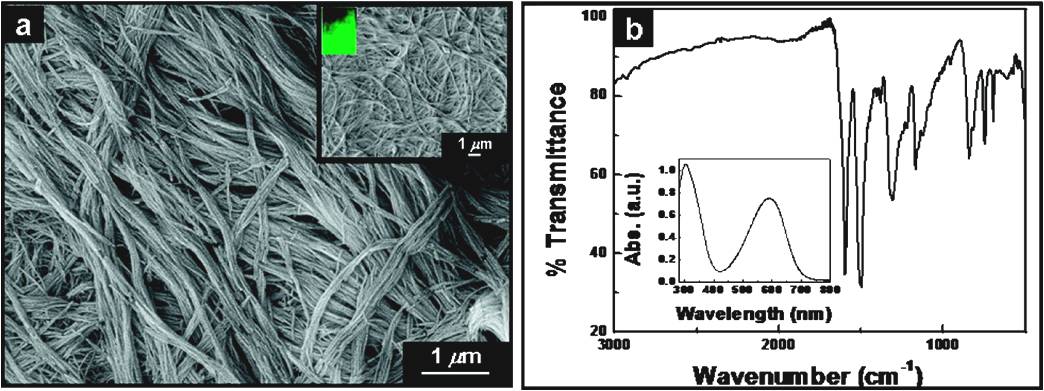
Chemical Vapor Detection Using Parent Polythiophene Nanofibers. Macromolecules 24 5414 (2009). V. Dua, S.P. Surwade, S. Jain, S. Ammu, X. Zhang, and S.K. Manohar. (citations: 23). Citations as of:07/2017 Early papers on seeding..... Synthesis of Polyaniline Nanofibers by “Nanofiber Seeding”, Journal of the American Chemical Society 126 4502 (2004). X. Zhang, W.J. Goux, and S.K. Manohar. (citations: 745). Bulk Synthesis of Polypyrrole Nanofibers by a Seeding Approach, Journal of the American Chemical Society 126 12714 (2004). X. Zhang, and S.K. Manohar. (citations: 206). Chemical Synthesis of PEDOT Nanofibers, Chemical Communications 42 5328 (2005). X. Zhang, A.G. MacDiarmid, and S.K. Manohar. (citations: 62). Nanofibers of Polyaniline Synthesized by Interfacial Polymerization, Synthetic Metals 145 23 (2005). X. Zhang, R. C.Y.-King, A. Jose, S.K. Manohar (citations: 176). Fibrillar Growth in Polyaniline, Advanced Functional Materials 16 1145 (2006). X. Zhang, H.S. Kolla, X. Wang, K. Raja, S.K. Manohar (citations: 111). Citations as of:07/2017
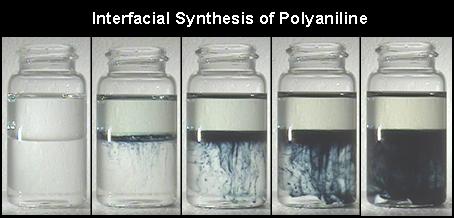
Polyaniline Nanofibers: Chemical Synthesis using Surfactants, Chemical Communications 20 2360 (2004). X. Zhang, and S.K. Manohar. (citations: 144) Chemical Synthesis of Highly Conducting Polypyrrole Nanofiber Film, Macromolecules 38 7873 (2005). A. Wu, H.S. Kolla, and S.K. Manohar. (citations: 164). Citations as of:07/2017 Polymer nanotubes When stoichiometric amounts of nanofibers are added in the above systems, polymer nanotubes are obtained in near-quantitative yield. The added nanofibers form the pores that then sheathed with polypyrrole during the polymerization. The pore can be leached out selectively, yielding highly conducting, hollow polypyrrole nanotubes having pore diameter in the 4-8 nm range. These tubes spontaneously reduce noble metal ions to the corresponding metal nanoparticles, at room temperature, without any capping or dispersing agents. These polymer/metal nanocomposites have a wide range of technological applications in fuel cells, hydrogen storage, supercapacitors, etc. Narrow Pore-diameter Polypyrrole Nanotubes, Journal of the American Chemical Society 127 14156 (2005). X. Zhang, and S.K. Manohar. (citations: 158) We have also used surfactants to synthe size conducting polymer nanotubes that are not accessible by existing synthetic routes. For example, a reverse emulsion polymerization method was used to chemically synthesize bulk quantities of microns long, tubes of electrically conducting PEDOT having tube diameter in the range 50-100 nm. Composites of PEDOT nanotubes with noble metals, metal oxides, etc., can also be readily synthesized using post-synthesis, and in situ polymerization methods. Chemical Synthesis of PEDOT Nanotubes, Macromolecules 39, 470 (2005)X. Zhang, J.-S. Lee, G.-S. Lee, D.-K. Cha, D.J. Yang, and S.K. Manohar. (citations: 136). Citations as of:07/2017 Polymer characterization The absolute molecular weights of parent polyaniline bases in the pernigraniline, emeraldine, and leucoemeraldine oxidation states have been measured by light scattering and the exact number of aniline repeat units determined. A 3-angle LS instrument equipped with a 785 nm laser has been used to measure the absolute molecular weight, a wavelength at which there is no absorbance by parent polyaniline bases. The molecular weight of the pernigraniline intermediate formed during the chemical oxidative polymerization of aniline increases by 17-20% when it is converted to emeraldine which is consistent with a two-step polymerization mechanism. These findings establish a solid experimental framework to chemically synthesize block co-polymers of polyaniline by using different monomers to intercept the reaction at the pernigraniline oxidation state. Absolute Molecular Weight of Polyaniline, Journal of the American Chemical Society 127, 12770 (2005). H. Kolla, S. Surwade, X. Zhang, A.G. MacDiarmid, and S.K. Manohar (citations: 112). Citations as of:07/2017
We have described an extremely simple method to obtain thin, optically transparent, strongly adherent films of single-walled carbon nanotube (SWNT) bundles on flexible plastic substrates such as poly(ethylene terephthalate) (PET: ‘overhead transparency’). These SWNT/PET films display a sheet resistance of 80 Ω/sq., >80% optical transparency, and robust flexibility, e.g., they can be bent and folded to a crease while retaining full electrical connection across the crease.
Citations as of:07/2017 |